
Is Oceanport The Next Smart Play For Turnkey Shore Investments?
Is your idea of a turnkey shore investment an Airbnb-ready home that starts booking on day one? In Oceanport, that playbook hits a hard stop. The borough restricts rentals of 90 days or less, so the classic nightly short-term model will not work here. In this guide, you’ll see what the rules mean for returns, which demand drivers matter, and the strategies that can still make sense in Oceanport.
Let’s dive in.
Oceanport is a small Monmouth County borough with roughly 6,100 to 6,300 residents and a high share of owner-occupied homes. Median household income is well above national levels, which supports stable demand for quality housing. You also benefit from easy access to beaches, nearby Long Branch and Asbury Park, and commuter options into New York City via nearby ferry service. For a quick data snapshot, see the U.S. Census Bureau’s Oceanport profile in Census QuickFacts.
Proximity is a real advantage. SeaStreak’s nearby Highlands and Atlantic Highlands terminals connect to Manhattan, which attracts both commuters and weekending city buyers. Check current routes and schedules on SeaStreak’s ferry service.
Oceanport prohibits short-term or transient rentals of 90 days or less. The borough’s code makes it unlawful to offer occupancy under 91 days, which effectively blocks nightly or weekly vacation rentals that many turnkey investors expect. The same ordinance framework requires certificates for rental or resale and landlord registration for non-owner-occupied units. You can read the details in the borough’s rental and certificate ordinance.
What this means for you: If your model depends on Airbnb-style income, Oceanport will not fit. If you can pivot to 91+ day terms or long-term leases, the door opens.
Two large redevelopment stories are worth tracking because they influence future housing demand and rental prospects:
Monmouth Park mixed-use plan. An ~80-acre, multi-phase, public-private project next to the racetrack is slated to add hotel, residential, retail, and entertainment uses. This can draw new visitors, employees, and long-stay guests. See coverage of the plan on ReBusinessOnline. The Planning Board has site materials posted for reference, including a site plan submittal.
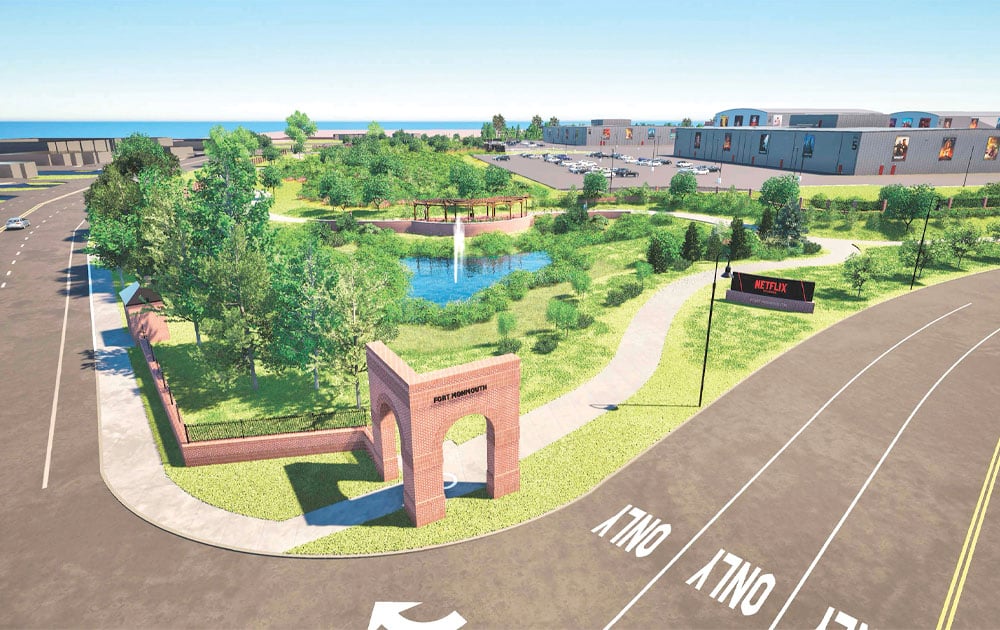
Fort Monmouth and the Netflix studio campus. The Mega Parcel redevelopment, including Netflix’s planned production campus, is a multi-year economic catalyst with construction and ongoing production jobs that can boost multi-month housing demand. You can review approvals and milestones in FMERA board documents, like this board report.
These projects are phased and long horizon. If they progress as planned, they can lift extended-stay and corporate housing demand.
Public data shows Oceanport’s single-family gross yields are modest, which is typical for owner-occupied shore neighborhoods.
That is before expenses like taxes, insurance, flood coverage, maintenance, and vacancy. The takeaway is clear: without nightly STRs, single-family cash flow is tight unless you buy well below median prices, pursue multi-unit configurations where permitted, or serve higher-rate 91+ day use cases.
A well-finished home with a one-year lease can work as a stable, lower-yield hold. Focus on durable finishes and systems because coastal maintenance adds cost. Underwrite conservatively and include realistic tax and insurance assumptions.
Multi-month leases can attract relocating households, extended-stay visitors tied to racetrack events, and production teams connected to Fort Monmouth. Furnished, design-forward homes in accessible locations often earn a premium for quarter-length or summer-length stays that comply with the 91+ day rule.
If your goal is improved yield, look for properties or parcels where multi-family is permitted. Oceanport’s zoning includes primarily single-family districts with limited multi-family or RMO designations. Always confirm zoning for the parcel in the borough code and discuss feasibility with the Planning Board.
Given high owner-occupancy, a well-executed flip to an end user can be part of a short-to-medium term plan. Prioritize timeless finishes, flood-mitigation improvements, and compliance items that ease inspections at resale.
Use this quick path to validate an Oceanport opportunity before you bid:
Short-term flips can be sensitive to thin inventory and headline-driven pricing. If you plan to hold, a 5 to 10+ year window that spans key phases of the Monmouth Park and Fort Monmouth projects may capture the most benefit. On exit, expect your strongest buyer pool to be owner-occupants who value turnkey presentation and flood-mitigation improvements.
If your definition of turnkey relies on nightly bookings, Oceanport is not the right market. If you can pivot to long-term or 91+ day leasing, target multi-family where permitted, or execute value-add improvements for retail resale, Oceanport can still be a smart, lifestyle-forward investment with upside tied to large-scale redevelopment.
Ready to calibrate your strategy around Oceanport’s rules and opportunities? Tap a bi-state, design-led listing and marketing approach with institutional reach. Connect with Danielle Lacko to evaluate options, position a property for premium resale, or source the right long-stay investment.
Stay up to date on the latest real estate trends.




Get assistance in determining current property value, crafting a competitive offer, writing and negotiating a contract, and much more. Contact me today.