Thinking about a waterfront home in Monmouth Beach and wondering what your actual rights are at the water’s edge? You are not alone. Waterfront terms can sound simple in a listing, but the rules behind docks, bulkheads, and access are specific in New Jersey. This guide walks you through riparian rights at the Jersey Shore with a focus on Monmouth Beach, so you can buy with clarity and confidence. Let’s dive in.
Riparian rights in New Jersey
Riparian rights are the rights that come with land touching a river, tidal estuary, or the ocean. They generally include access to the water and reasonable use, like building a dock, when allowed. Your rights sit alongside public rights to navigation, fishing, and recreation, and they are subject to state and federal permits.
New Jersey treats tidal waters and tidelands under the public trust doctrine. Areas seaward of the mean high water line are typically held for public use. Private ownership of tidelands can exist, but it depends on historic grants and careful title research. For state-level rules, start with the New Jersey Department of Environmental Protection’s Land Use and Coastal permitting resources.
Public trust and tidelands basics
Tidelands are often managed by the state, which handles claims, leases, and licenses for in-water structures. Even if your deed references riparian rights, the state may still control the use of the tidal area. This is why owners often need to verify whether any state claims or leases exist before relying on those rights.
Reasonable use and “wharfing out”
Courts in New Jersey generally allow riparian owners to extend a pier or bulkhead to reach navigable water if it is reasonable and does not unreasonably interfere with public navigation. What counts as reasonable depends on shoreline type, nearby channels, and environmental conditions. Approvals still hinge on permits and site-specific reviews.
How this plays out in Monmouth Beach
Monmouth Beach sits between the Atlantic Ocean and the Shrewsbury River estuary. Shorelines vary from ocean beach and dunes to bulkheaded riverfront and marsh edges. These conditions affect where the mean high water line lies and what you can build.
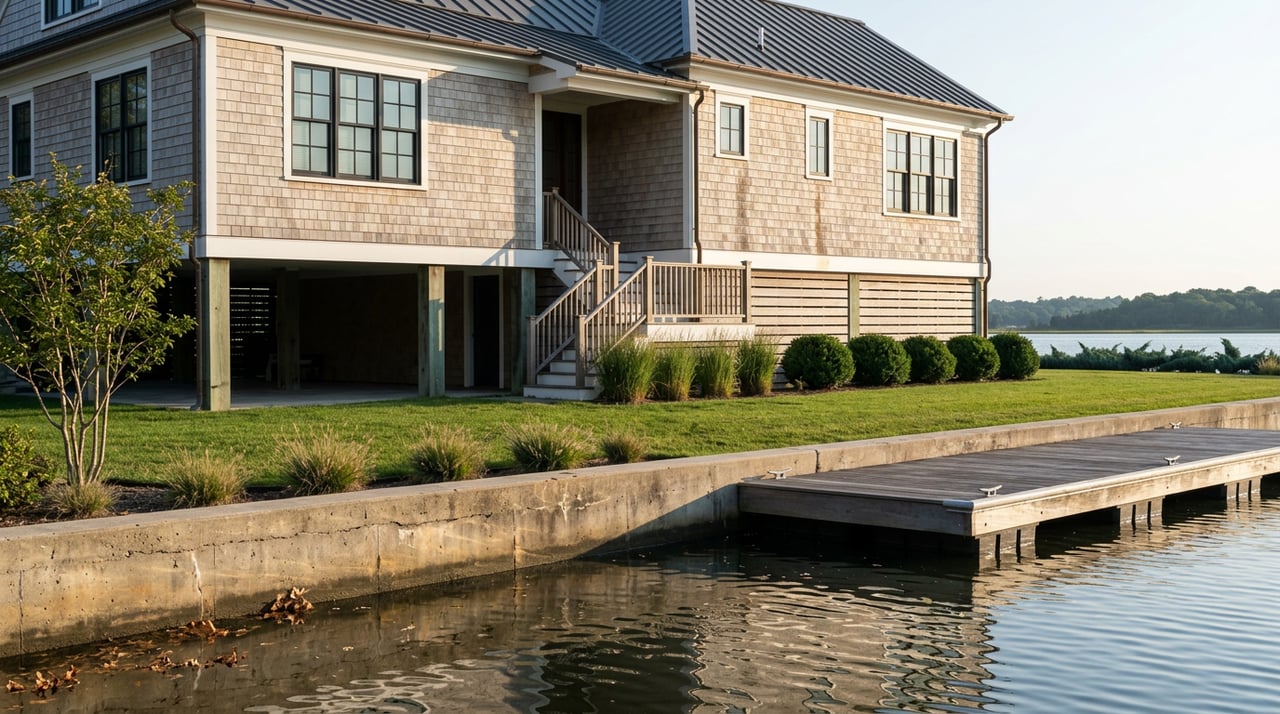
Local buyers often face a few recurring issues. Title for tidelands can be unclear on older deeds. Bulkheads and seawalls bring maintenance and permit questions. Docks need to meet spacing and navigation rules for safety. Many properties are in V, VE, or AE flood zones, which affect construction standards and insurance. You can review current flood mapping at the FEMA Map Service Center.
For local records, check the Borough of Monmouth Beach for ordinances and board approvals. The Borough posts clerk, planning, and meeting resources on the official municipal site. County-level parcel maps and planning references are available through the Monmouth County website.
Permits for docks, piers, and bulkheads
Most waterfront structures require permits, even when your deed suggests you have riparian rights. Expect a layered review that can include local, state, and federal agencies.
- Municipal: zoning rules, waterfront setbacks, and possible variances.
- County: select shore projects, easements, and mapping coordination.
- State (NJDEP): waterfront development and CAFRA permits for in-water work or shoreline changes; tidelands leases or licenses where needed. See NJDEP Land Use.
- Federal (U.S. Army Corps of Engineers): Section 10 and Section 404 permits for in-water structures and discharges. Start with the New York District’s Regulatory Program.
Common constraints to expect
- Size and placement limits that tie structure length and width to your frontage and neighbors.
- Navigation clearances near channels and required setbacks.
- Habitat protection where submerged vegetation, shellfish, wetlands, or spawning areas are present.
- Seasonal restrictions on in-water work or requirements for removable components.
- Mitigation measures for bulkhead replacement, with growing interest in living shoreline options when feasible.
Repairs versus new construction
True maintenance can be simpler to approve, while replacements, enlargements, or new structures trigger fuller reviews. Existing features may be considered grandfathered in limited ways, but replacement often must meet current standards. Get copies of prior permits and do not assume like-for-like will be allowed without approvals.
Buyer due diligence checklist
Before you write an offer or during attorney review, line up these items:
- Deed and chain of title
- Pull the full deed history to check for tideland grants, reservations, and public easements.
- Current survey with tidal details
- Obtain a recent boundary survey that shows the mean high water line, bulkhead, docks, and any encroachments.
- Title insurance exceptions
- Review the title commitment for tidelands and public trust exceptions. Ask about survey endorsements and whether tideland risk can be narrowed.
- NJDEP tidelands record check
- Confirm if the state has a claim, lease, or encumbrance on the parcel through NJDEP’s tidelands bureaus. Start at NJDEP Land Use.
- Permits for existing structures
- Collect copies of permits for docks, bulkheads, seawalls, or retaining walls. Verify their status and transferability.
- Flood and coastal hazard review
- Shoreline condition and history
- Ask the Borough about beach nourishment or emergency repair history, and request recent photos or engineering reports if available. Use the Monmouth County site for parcel and planning context.
- Utilities and systems
- Identify sewer or septic locations and any restrictions tied to wetlands or proximity to water.
- Municipal and HOA rules
- Neighbor and navigation checks
- Compare neighboring structures and channel alignments to anticipate spacing and clearance requirements.
Smart questions to ask your team
- Does the deed include or exclude tidelands, and how strong is that claim historically?
- Are there recorded public easements to the water across the lot?
- What permits exist for current docks or bulkheads, and are they current and transferable?
- If I want to build or replace a dock, which NJDEP and Army Corps permits will be required and what timeline is typical?
- Is the area subject to erosion management or public works that could shift lines or access?
- What exclusions will likely appear in the title policy related to tidelands?
Timelines, costs, and expectations
Plan for a separate process and budget if you intend to add or modify waterfront structures. Permitting can take months, and engineering or environmental studies may be required. Title insurance often includes standard exclusions for tidelands and public trust claims. Do not rely on listing remarks that say “riparian rights included” without confirming deed language, surveys, and state records.
Who to involve early
- New Jersey real estate attorney with coastal and tidelands experience.
- Licensed land surveyor who can delineate tidal lines and encroachments.
- Coastal engineer or marine contractor for feasibility and cost estimates.
- Permitting or environmental consultant with NJDEP, CAFRA, and U.S. Army Corps experience.
- Municipal engineer or harbor master for local mooring and navigation guidance.
- Title company experienced in shore properties and endorsements.
Next steps
Waterfront ownership in Monmouth Beach can be a fantastic lifestyle and a sound investment when you go in with clear information. With the right team, you can verify riparian rights, confirm permits, and design improvements the smart way. If you want a curated, high-touch path from discovery to closing, connect with Danielle Lacko to align the right experts and move forward with confidence.
FAQs
What are riparian rights in Monmouth Beach?
- They are property rights tied to land on tidal water that allow reasonable water access and use, subject to public rights and permits through agencies like NJDEP Land Use.
Do I own the land under the water by my lot?
- Not necessarily, because New Jersey often holds tidelands for the public; private ownership requires historic grants and must be verified through title and NJDEP records.
Can I build a new dock on the Shrewsbury River?
- Possibly, if site conditions and navigation allow and you secure municipal approvals, NJDEP authorization, and often a U.S. Army Corps permit via the Regulatory Program.
What permits do I need to replace a bulkhead?
- You will typically need NJDEP waterfront approvals and may need municipal or county approvals, with design and construction standards reviewed for current conditions.
How do flood zones affect a Monmouth Beach purchase?
- Flood zones like V, VE, or AE influence building standards and insurance; verify your zone and elevation through the FEMA Map Service Center.
How can I check for a state tidelands claim on a property?
- Request searches through NJDEP’s tidelands bureaus and review title and survey documentation, starting with NJDEP Land Use.
Are existing docks or seawalls grandfathered?
- Some existing structures may have limited grandfathering, but replacements or enlargements usually must meet current rules and require permits.